A First-Time Homeowner’s Guide to Ongoing Home Maintenance
Guest Post by Cherie Mclaughlin
Buying your first home is a milestone—and also a shift in responsibility. From the moment you get the keys, you become the steward of systems that quietly keep everything running: water, air, structure, and safety. Understanding a few core maintenance habits early can save money, prevent stress, and help your home age gracefully instead of expensively.
Key Takeaways
Small, routine checks often prevent large, disruptive repairs.
Learning where systems are located builds confidence and speeds up fixes.
Consistent maintenance protects both comfort and long-term value.
Starting With the Systems You Rely on Daily
Some parts of a home demand attention simply because you use them constantly. Heating and cooling systems should be inspected and serviced annually to maintain efficiency and avoid surprise breakdowns. Electrical panels, outlets, and visible wiring deserve a quick visual check a few times a year for signs of wear or overheating. Even basic tasks like replacing HVAC filters can improve air quality and lower energy bills.
Plumbing Maintenance That Pays Off Over Time
Water problems often start small and grow quietly, which is why early vigilance matters. Make a habit of scanning under sinks, around toilets, and near appliances for moisture or mineral buildup. Thoughtful plumbing care also protects surrounding materials like cabinetry and flooring. Over time, these habits reduce both emergency calls and long-term repair costs.
Quality fixtures and fittings reduce the risk of repeat issues and support smoother performance throughout the home. When repairs or upgrades are needed, sourcing reliable components from a trusted plumbing supply provider ensures compatibility and durability.
Seasonal Tasks Worth Putting on Your Calendar
Homes respond to the seasons, and maintenance should too. Cleaning gutters in fall helps prevent ice dams and water damage during winter. In spring, checking grading and drainage keeps water flowing away from the foundation. Summer is ideal for exterior inspections, while winter is a good time to monitor indoor humidity and insulation performance.
Habits That Prevent Small Problems from Becoming Big Repairs
A few repeatable habits can prevent small issues from turning into expensive problems:
Walk the exterior quarterly to spot cracks, peeling paint, or loose fixtures.
Test smoke and carbon monoxide alarms every few months.
Flush infrequently used drains to keep traps from drying out.
How Early Organization Simplifies Ongoing Home Care
Organization may not sound like maintenance, but it directly supports it. Working with Nest Home Organizing can help new homeowners create functional systems from the start. Organized kitchens, closets, garages, and storage areas make tools, manuals, and supplies easy to find. Clear layouts reduce clutter before it accumulates and make regular upkeep faster. When everything has a place, maintenance becomes part of daily life instead of a dreaded project. This early investment often pays off in time saved and stress avoided.
Home Details Worth Keeping Track of Early
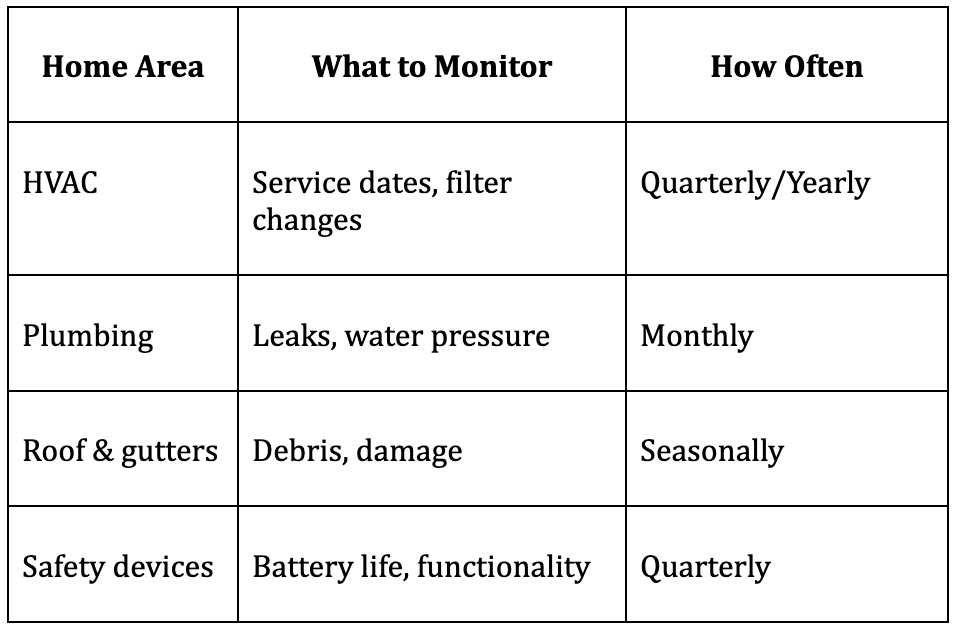
Keeping basic records helps you notice patterns and plan ahead.
Your First-Year Home Care Questions Answered
New homeowners often reach a point where routine upkeep raises practical questions about cost, timing, and responsibility.
Do I need professional inspections every year?
Not always, but annual HVAC servicing and periodic roof inspections are wise. These professionals catch issues that aren’t obvious to the untrained eye. Think of inspections as preventative medicine rather than emergency care.
What maintenance tasks can I safely do myself?
Basic tasks like changing filters, cleaning gutters, and checking for leaks are usually manageable. Always follow manufacturer guidelines and stop if something feels unsafe. When in doubt, a professional visit costs less than a mistake.
How much should I budget for annual maintenance?
A common guideline is 1–3% of your home’s value per year. This covers routine care and small repairs without financial strain. Older homes may lean toward the higher end of that range.
When should I replace rather than repair?
If a system is nearing the end of its expected lifespan and repairs are frequent, replacement may be more cost-effective. Energy efficiency gains can also justify upgrading sooner. Keep records to spot these trends clearly.
Is preventive maintenance really worth the time?
Yes, because it shifts costs from emergencies to planned expenses. Preventive care also reduces disruption to daily life. Over time, it preserves both comfort and resale value.
Conclusion
Home maintenance doesn’t require mastery overnight. By learning your systems, setting simple routines, and organizing your space early, you build confidence with every small task. Over time, those habits turn ownership from intimidating into empowering. A well-cared-for home rewards you with comfort, stability, and fewer unwelcome surprises.